
Eco-Friendly Landscaping Practices Explained
By Elena Whitmore / Sep 19
Did you know that a well-maintained tree can increase your property value by up to 15%? As a homeowner, understanding the nuances of seasonal tree care is vital for both the beauty of your landscape and the health of your trees. This guide will equip you with the essential knowledge needed to nurture your trees effectively.
Understanding the various aspects of seasonal tree care can significantly impact tree health and property value. Below is a visual breakdown of essential components and their characteristics.
Focus on proper pruning in late winter and timely fertilization in spring.
Regular watering in dry seasons and protection from heavy snow loads are key.
Regular watering, staking, and protection from pests are essential.
Focus on maintaining soil health and monitoring for diseases.
Pruning to remove dead branches and ensuring adequate water supply is crucial.
Conduct soil tests and use organic fertilizers to enrich the soil.
As a homeowner, understanding the significance of seasonal tree maintenance is key to ensuring that your trees remain healthy and your property value stays intact. Well-maintained trees not only enhance the aesthetic appeal of your home but also contribute to a healthier environment. At Rooted Edge, we believe that caring for your trees is an investment that pays off in both beauty and property value.
Tree health has a direct correlation with the overall vitality of your landscape. By prioritizing seasonal care, you actively participate in preventing diseases, fostering growth, and preserving the structural integrity of your trees. This proactive approach can also lower long-term maintenance costs, proving beneficial for both your wallet and your home’s curb appeal.
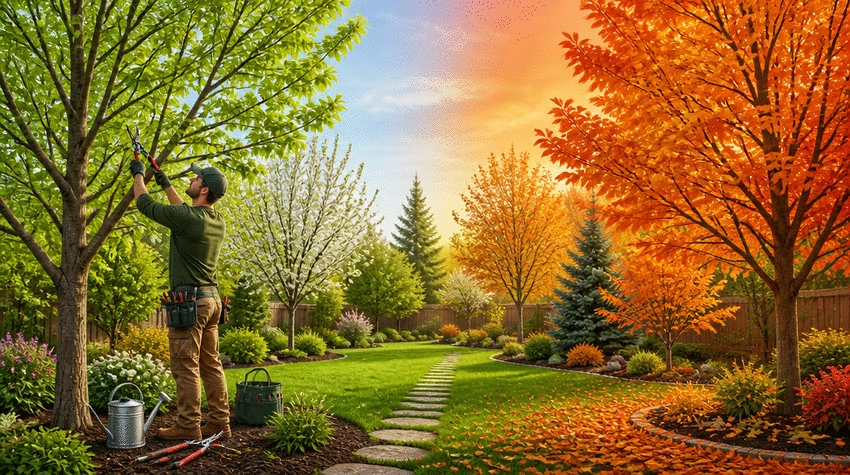
Seasonal tree care is essential in adapting to the changing needs of your trees. Each season presents unique challenges and opportunities for growth, and being aware of these can make all the difference. For example, spring is a time of awakening, while autumn prepares trees for dormancy. This dynamic cycle means that regular maintenance is critical.
Moreover, the health of your trees can significantly influence your property’s value. Healthy, vibrant trees can create a welcoming atmosphere and contribute to a picturesque landscape. On the flip side, neglected trees can lead to potential hazards, such as falling branches, which may deter potential buyers. By investing time in seasonal care, you enhance both safety and aesthetic appeal in your outdoor spaces.
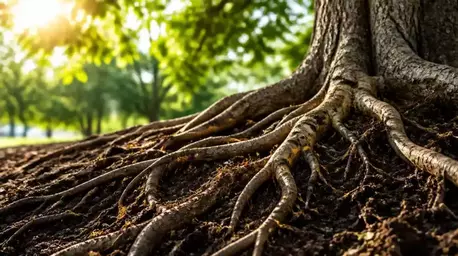
The foundation of effective tree care lies in the health of the soil. Healthy soil promotes strong root systems and overall tree vitality. To ensure that your trees thrive, consider implementing the following fertilization techniques:
Additionally, it's essential to recognize that not all trees have the same soil needs. By understanding the specific requirements of your tree species, you can tailor your fertilization techniques accordingly. This attention to detail can lead to improved tree health and vitality, making your landscape a true reflection of your care! For more insights into maintaining a healthy environment for your trees, check out our guide on enhancing tree health through design.
At Rooted Edge, we emphasize the importance of soil health in our practices. By integrating thoughtful fertilization and soil management, we help our clients create thriving outdoor environments that are not only beautiful but also sustainable. Your trees are more than just fixtures in your yard; they are living components of a larger ecosystem. Let's nurture them together!
Here's a brief recap of the key points discussed so far:
Creating a sustainable environment for our trees requires more than just seasonal care; it needs a long-term commitment. At Rooted Edge, we believe that a tailored approach to tree care can significantly enhance both the health of your trees and the beauty of your landscape. To achieve this, developing an annual checklist that fits your specific tree species and climate zone is essential!
By establishing a seasonal care calendar, you can stay organized and ensure that your trees receive the attention they deserve. Consider including these key elements in your calendar:
By marking these tasks throughout the year, you'll create a symbiotic relationship with your trees, fostering their growth and vitality!
Not all trees are created equal! When it comes to tree care, understanding the differences between deciduous and evergreen trees is crucial. Deciduous trees, like maples and oaks, require specific attention during their leaf-off periods, while evergreens, such as pines, need care year-round.
Here are some tailored care tips:
By recognizing these differences, you can customize your approach and nurture your trees more effectively! For those interested in sustainable practices, explore our article on sustainable tree care for homeowners.
The journey of a tree doesn't end with planting! Each growth stage presents unique challenges and care requirements. From young saplings to mature trees, understanding these stages can greatly impact their health and stability.
Let's break down the care needs by growth stage:
By adapting your care to each stage, you can help your trees thrive for years to come!
While caring for trees can be a rewarding journey, there are times when professional help is necessary. At Rooted Edge, we recognize the value that expert arborists bring to tree care. Sometimes, the complexities of tree health can exceed our knowledge and comfort.
Consider these scenarios when it might be time to call in the professionals:
Bringing in an arborist can save you time, money, and even your trees from further damage! Learn more about urban tree care tips to keep your trees healthy in any environment.
When it comes to tree care, the debate between DIY methods and hiring a professional can be tough! While there are many effective DIY tips, some tasks are better left to the experts. Let's weigh the benefits of each.
DIY Tips:
Professional Services:
Making informed choices about where to invest your time and resources can lead to healthier trees and a happier landscape!
Monitoring tree health is an ongoing task that every homeowner should embrace! Regular assessments allow you to catch potential issues before they escalate. Knowing how to conduct a simple health assessment is a valuable skill.
Here’s a quick guide on what to look for:
Recognizing these signs early can lead to effective management and treatment strategies!
Taking care of your trees is a rewarding endeavor that pays off in beauty and health! Remember, each season carries its unique responsibilities and benefits. By staying engaged and informed, you can ensure your trees thrive throughout their lives.
Join the community of responsible homeowners who take pride in nurturing their landscapes! Download our seasonal checklist to help guide your tree care journey and share your experiences with others. Together, we can create vibrant, sustainable outdoor spaces!
Here is a quick recap of the important points discussed in the article:
By Elena Whitmore / Sep 19
By Elena Whitmore / Sep 12
By Elena Whitmore / Sep 03