Eco-Friendly Landscaping Practices Explained
By Elena Whitmore / Sep 19
Have you ever wondered how the majestic trees in your yard might be secretly damaging your driveway or patio? The relationship between tree roots and hardscapes is more intricate than most homeowners realize, and understanding this dynamic can save you time and money in the long run.
Monitoring your hardscapes for signs of tree root damage is essential. Below are common indicators you should look out for:
Visible fissures running through the surface can indicate root intrusion.
Areas that have risen above the surrounding surface are signs of underlying root pressure.
Trip hazards can emerge from uneven surfaces caused by root expansion.
Parts of the driveway that are visibly lifted can indicate significant root pressure.
Are you noticing cracks in your driveway or uneven surfaces on your patio? It might be due to the sneaky growth of tree roots! At Rooted Edge, we understand that while trees bring beauty and tranquility to your outdoor space, their roots can sometimes wreak havoc on hardscapes, leading to costly repairs and headaches for homeowners. For proactive solutions and tree care around hardscapes, it's essential to stay informed.
In this section, we’ll dig deep into how tree roots can affect your driveway and patio, focusing on the causes, signs of damage, and how to prevent these issues from arising in the first place. Let’s ensure your outdoor areas remain beautiful and functional!
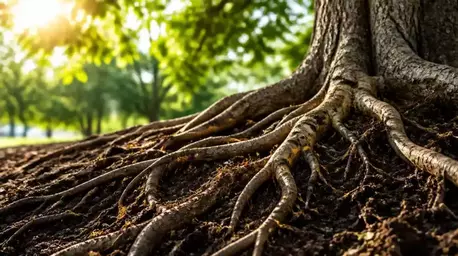
Tree roots can be quite powerful and often grow in search of water and nutrients. As they expand, they can push up against patios and driveways, causing unsightly damage. This pressure can lead to cracks, bumps, and even serious heaving of the surfaces. It’s essential to recognize the role tree roots play in this process!
When planning your outdoor space, we encourage you to think about the placement of trees relative to hardscapes. Understanding this relationship helps avoid damage, which ultimately saves you money and ensures the beauty of your landscape remains intact.
Tree root damage typically occurs through two main mechanisms: expansion and soil disruption. When roots grow, they expand and can lift hard surfaces like concrete, leading to cracks. Additionally, as roots displace soil, they can create voids, causing further instability in your paving. To learn more about managing these issues, explore our article on managing tree roots by sidewalks.
Concrete is a durable surface, but it isn't impervious to the forces of nature. When tree roots grow and press against concrete, they can cause it to expand and shift, leading to cracks and uneven surfaces. This relationship highlights why it's crucial to consider tree placement when installing or maintaining driveways and patios.
At Rooted Edge, we believe that understanding this relationship allows homeowners to make informed decisions when planning their landscapes. By considering both trees and hardscapes as coexisting elements, you can create a harmonious outdoor environment!
Once you've planted your trees, it's important to monitor your hardscapes for signs of root damage. Look out for common indicators such as:
If you spot these issues, don't ignore them! Early detection can save you a lot of trouble and expense down the line.
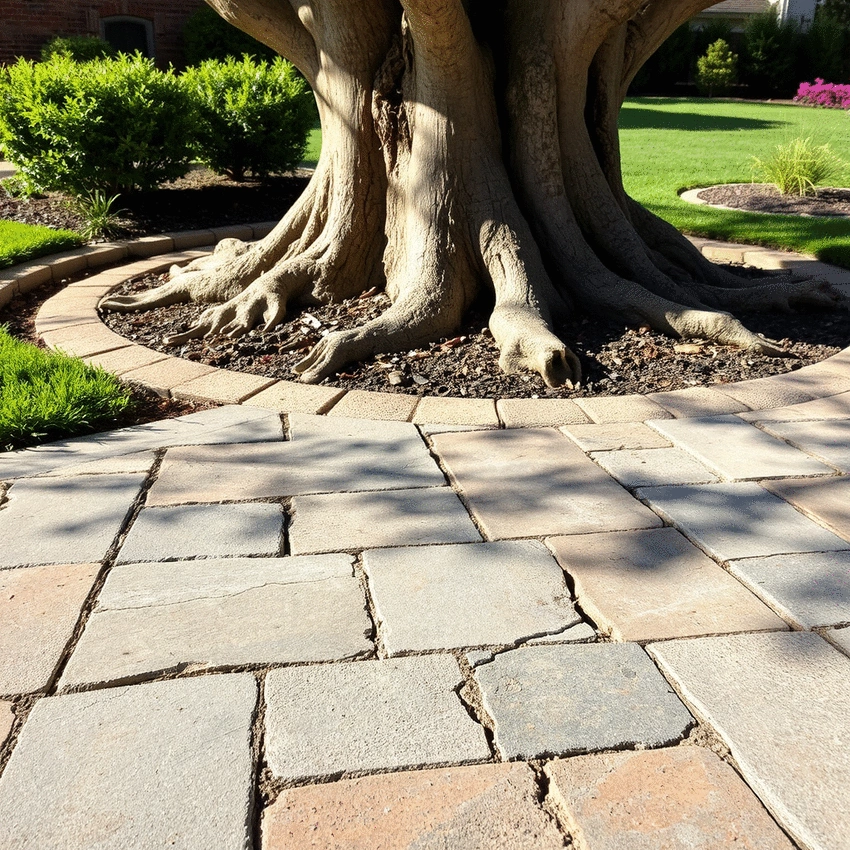
To help you better understand, here are some visual examples of what tree root damage can look like:
These visuals can serve as a guide to help you assess the condition of your paving surfaces. Keeping an eye out can keep your outdoor spaces safe!
It's crucial to recognize that not all damage is visible immediately. Over time, small cracks can worsen, leading to significant structural issues. By understanding how roots interact with hardscapes, you can take proactive measures to protect your driveway and patio. For more in-depth information, check out our guide on root management for hardscaped areas.
Regular assessments, coupled with preventive actions, can help maintain the beauty of your outdoor areas while ensuring the health of your trees. At Rooted Edge, we’re here to help you achieve that balance!
Did you know? Regularly monitoring your trees and their root systems can help you catch potential issues before they escalate. Consider scheduling annual assessments with a professional arborist to ensure your trees remain healthy while protecting your hardscapes!
As we wrap up our discussion on the intricate relationship between tree roots and paving surfaces, it's crucial to remember that maintaining a balance between these two elements is essential for a thriving outdoor space. At Rooted Edge, we believe that trees can coexist beautifully with hardscapes, enhancing both aesthetics and functionality. However, ignoring tree root damage can lead to significant long-term effects that affect not just your driveway or patio, but also the overall health of your landscape.
When tree roots intrude into paving areas, they can create a host of problems that may escalate over time. Cracks, bumps, and uneven surfaces can become more pronounced, resulting in costly repairs and potential hazards. Neglecting these signs could even lead to further structural damage, making timely intervention critical. Therefore, understanding the balance between nurturing trees and safeguarding hardscapes is essential for any homeowner.
The long-term effects of ignoring tree root damage can be detrimental not only to your property but also to the environment. Trees play a vital role in our ecosystem, contributing to air quality, wildlife habitat, and even urban cooling. However, when their roots disrupt paving surfaces, it can lead to increased maintenance costs and safety concerns.
Furthermore, the impact of tree preservation versus property damage is a delicate balance to strike. Urban trees, for example, often face challenges as they grow alongside infrastructure. We must recognize that these trees are not just ornamental; they provide shade, improve air quality, and create a more pleasant living environment. Thus, fostering a relationship between trees and hardscapes can result in sustainable outdoor spaces that benefit everyone.
Ignoring tree root damage can lead to various issues, including:
By addressing these issues proactively, homeowners can maintain both the beauty of their landscapes and the integrity of their hardscapes. For comprehensive solutions, consider our professional tree maintenance services.
I often receive questions from homeowners concerned about the interaction between tree roots and their paving surfaces. Here are some of the most common inquiries I encounter:
If you suspect tree root damage, there are several steps you can take to address the issue. Start by assessing the condition of your hardscapes and identifying visible signs of damage. If you see cracks or uneven surfaces, it's best to consult a professional. At Rooted Edge, we focus on providing tailored solutions for homeowners facing these challenges.
Remember, understanding tree health and maintenance is crucial for long-term solutions. By taking proactive measures, you can ensure both your trees and hardscapes flourish, creating a stunning and sustainable outdoor environment! For more tips on blending aesthetics with functionality, consider tree-friendly landscape design tips.
Here is a quick recap of the important points discussed in the article:
By Elena Whitmore / Sep 19
By Elena Whitmore / Sep 12
By Elena Whitmore / Sep 03