Eco-Friendly Landscaping Practices Explained
By Elena Whitmore / Sep 19
Did you know that integrating trees into hardscape designs can significantly enhance both aesthetic appeal and environmental sustainability? Understanding how this relationship works is crucial for creating inviting outdoor spaces. Let's dive into the key insights you'll gain from this article.
Exploring the advantages of merging trees with hardscape elements reveals a multitude of ecological and aesthetic benefits.
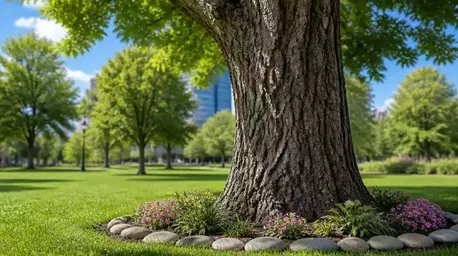
Trees add a natural beauty that enhances any hardscape design.
Trees improve air quality and provide habitats for wildlife.
Well-designed landscapes with trees can significantly boost the value of a property.
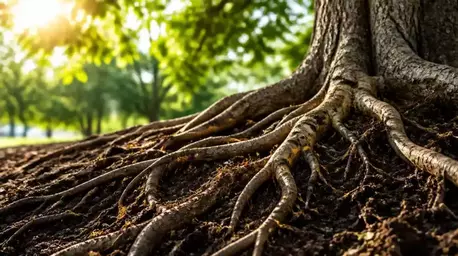
Tree roots help to stabilize soil, preventing erosion around hardscaped areas.
When we think about landscape design, trees often come to mind as the stars of the show! They provide shade, beauty, and life, but their role in hardscape areas can be just as significant. Understanding how trees and hardscape elements interact is crucial for creating outdoor spaces that are not only beautiful but also sustainable and functional. For more insights on this topic, consider reading about designing landscapes with trees.
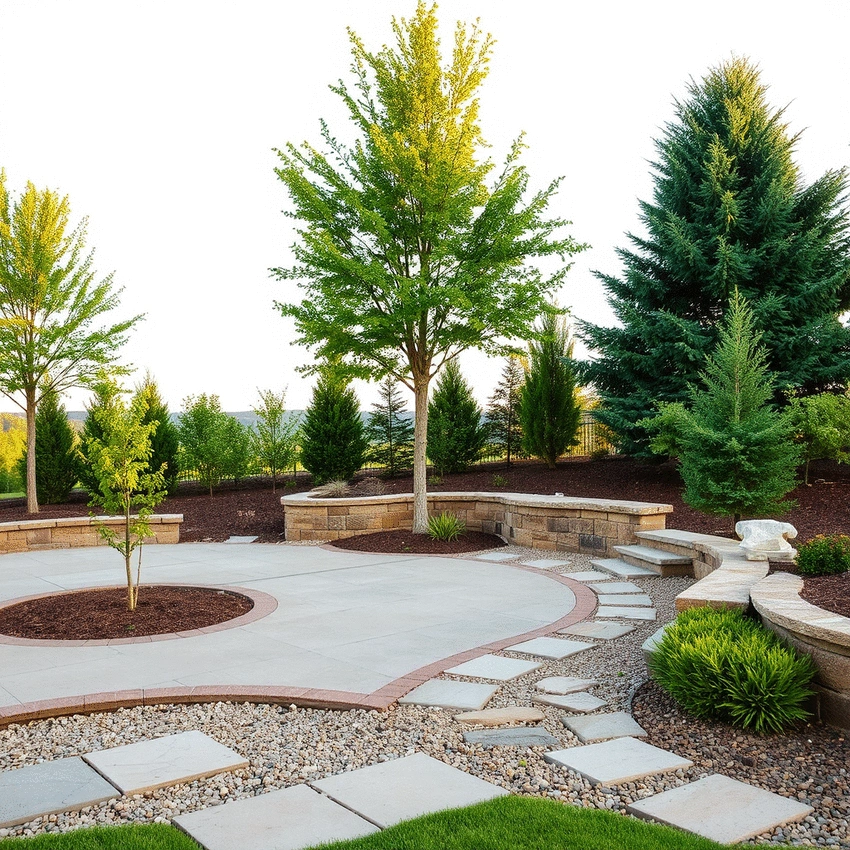
At Rooted Edge, we believe that the integration of trees with hardscaping goes beyond aesthetics. It’s about creating a harmonious environment that respects the natural growth patterns of trees while enhancing the hardscape features—like patios and walkways. This balance can lead to outdoor spaces that are both inviting and ecologically sound.
Hardscape refers to the non-plant elements in landscape design, such as patios, walkways, and retaining walls. These features provide structure and usability to outdoor spaces. When done well, hardscaping complements the surrounding vegetation, creating a cohesive look that invites people to enjoy the outdoors.
The importance of hardscape elements cannot be overstated. They serve multiple purposes, such as:
By carefully planning the relationship between trees and hardscapes, we can create environments that are not only functional but also nurturing to the ecosystem. This is a philosophy I hold dear at Rooted Edge, where we aim to merge nature and design.
The integration of trees with hardscaping comes with a plethora of benefits. For starters, trees can help to cool down hard surfaces like patios and driveways, making them more comfortable during hot days. Additionally, they provide shade, which can reduce energy costs by lowering the temperature around your home! This approach aligns perfectly with hardscape and tree care integration strategies.
Here are some key benefits of integrating trees with hardscaping that I’ve observed in my years of experience:
Integrating trees with hardscape not only makes spaces more inviting but also promotes sustainability. When we make thoughtful choices, we can create environments that balance beauty and function, and that’s what I strive for at Rooted Edge!
Here's a brief recap of the key points discussed so far:
A1: Integrating trees with hardscaping offers numerous benefits, including improved aesthetics, enhanced environmental quality (e.g., better air quality, wildlife habitats), increased property value, and effective soil erosion control. Trees also help cool hard surfaces and reduce energy costs by providing shade.
A2: Hardscape refers to non-plant elements in landscape design like patios, walkways, and retaining walls. It's crucial because it provides structure, defines spaces, creates pathways, enhances aesthetic appeal, and offers functional areas for various activities and gatherings.
A3: Essential maintenance includes seasonal care: pruning dead branches and mulching in spring; monitoring pests and ensuring adequate watering in summer; raking leaves in fall; and protecting young trees from frost in winter. Consistent care ensures tree health and longevity.
A4: Key factors include growth speed (fast-growing trees may need more maintenance), long-term value (trees that thrive enhance property value), and maintenance requirements (choose species aligning with your capacity for upkeep). Evaluating these helps make informed, sustainable decisions.
A5: Yes, interactive zone and soil finder tools help identify trees suited to local conditions (soil type, hardiness zones, light exposure). Additionally, root system comparison charts prevent damage to hardscapes, and landscaping software aids in visualizing tree and hardscape interactions.
Once you've integrated trees into your hardscape design, the work doesn’t stop there! Proper maintenance is crucial for ensuring that these trees thrive and contribute positively to your outdoor space. At Rooted Edge, we believe that understanding seasonal care and establishing a routine can make all the difference in keeping your trees healthy and beautiful. For comprehensive guidance, explore our tree maintenance services.
Seasonal care varies based on the type of tree and its specific needs, but there are some general practices that everyone can follow. By being mindful of these care routines, you can keep your trees looking their best while also enhancing the overall aesthetic of your hardscaped environment. Here’s a quick guide to year-round care:
When considering the integration of trees into your hardscape, it’s important to weigh the costs and benefits. Investing in trees can enhance the value of your property and improve your outdoor experience. However, understanding the growth speed and maintenance requirements for different species is key to making informed decisions.
Let’s break down some important factors to consider:
As an arborist, I often find myself advising clients about how to choose trees that offer both beauty and functionality. Make sure to evaluate how quickly a tree can grow and how much care it will need over time. For instance, a tree with a slower growth rate may take longer to provide shade but can be more resilient long term.
In my experience, it’s beneficial to take a holistic view of your landscaping goals. Think about what you want your outdoor space to achieve and choose trees that align with that vision. This way, you ensure that your investment pays off in the long run!
Choosing the right tree for your hardscape can feel overwhelming, but there are plenty of resources available to help! At Rooted Edge, we advocate for utilizing various tools that can guide your selection process effectively. Using these resources can simplify the decision-making process and lead to better outcomes for your outdoor environment.
One of the best tools available is an interactive zone and soil finder. Such tools help you identify the right trees suited to your local conditions. With just a few clicks, you can gather essential information about tree care around hardscapes:
Using the right tools makes it easier to match tree species with your specific environment. This way, you can avoid frustrating missteps and ensure your trees flourish within their hardscape. Plus, knowing the local conditions gives you a strong foundation for future planting decisions!
Another effective resource is a root system comparison chart. Understanding how different trees grow their roots can help you make informed choices when integrating them with hardscaping elements. Some things to keep in mind include:
Lastly, consider utilizing landscaping software as a planning tool. This software can help you visualize how trees will interact with hardscape designs. It’s a fantastic way to experiment with different layouts and find the best fit for your unique outdoor space. Our expertise in root management for hardscaped areas can further assist in your planning.
As we’ve seen, making informed choices about the trees you select for hardscape areas involves understanding their aesthetic and functional value. By carefully considering site-specific conditions and tree characteristics, you can cultivate a landscape that is both beautiful and sustainable.
At Rooted Edge, I encourage everyone to engage in sustainable practices when designing their outdoor spaces. This not only benefits your property but also contributes positively to the local ecosystem. So, let’s work together to create outdoor environments that thrive in harmony with nature!
Here is a quick recap of the important points discussed in the article:
By Elena Whitmore / Sep 19
By Elena Whitmore / Sep 12
By Elena Whitmore / Sep 03