Eco-Friendly Landscaping Practices Explained
By Elena Whitmore / Sep 19
In today's world where outdoor spaces often clash with nature, finding harmony is essential. Tree-safe hardscaping not only enhances your landscape but also protects the health of your trees, which in turn supports a thriving ecosystem. Are you ready to transform your outdoor environment while prioritizing tree health?
Understanding how to select hardscaping materials that support tree health is crucial. Below are the key considerations for choosing tree-safe hardscaping materials, represented visually. For more insights on thoughtful outdoor design, explore our guide on designing landscapes with trees.
Ensure materials don’t restrict root growth or access to essential nutrients.
Opt for permeable options that allow water and air to reach tree roots.
Choose materials that are eco-friendly and sustainable to support the local ecosystem.
Select long-lasting materials that withstand various weather conditions without degrading.
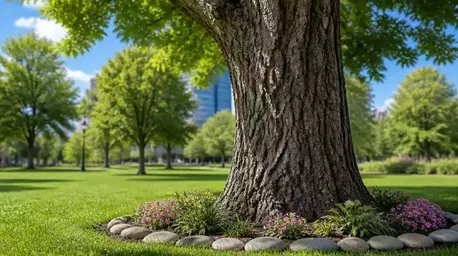
When we think about our outdoor spaces, the *balance between hardscaping and tree health* is often overlooked. Tree-safe hardscaping refers to the careful selection and placement of materials that support healthy trees while enhancing the beauty of your landscape. At Rooted Edge, we prioritize this relationship, understanding that the materials we choose can significantly impact the vitality of our trees and the overall ecosystem.
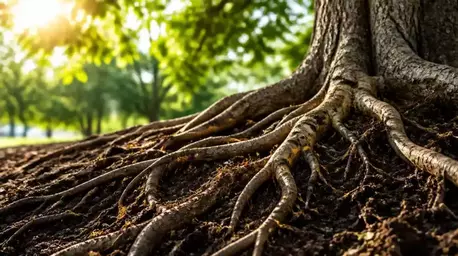
Tree-safe hardscaping is all about creating outdoor structures and surfaces that do not harm tree roots or inhibit their growth. This approach recognizes that trees are living entities that need space to thrive, both above and below ground. By understanding the *significance of tree health* in your landscaping projects, you ensure a harmonious coexistence of hardscape and nature.
Incorporating tree-safe practices means considering how materials interact with trees. For instance, non-permeable surfaces can lead to water runoff, depriving roots of necessary hydration. By choosing tree-safe hardscaping, you are not just designing a space; you’re nurturing a thriving environment! For more detailed information on preventing damage, consider our article on root damage prevention for foundations.
When selecting materials for hardscaping, several key factors come into play to guarantee tree safety:
These considerations not only protect the health of your trees but also contribute to a sustainable landscape. Remember, the materials you choose should work in harmony with the existing flora, promoting a vibrant outdoor space.
When it comes to hardscaping, *durability is non-negotiable*. Selecting materials that can withstand environmental challenges ensures that your hardscape remains intact for years. For example, natural stone is often favored for its resilience and beauty, while concrete can crack under extreme conditions. It’s vital to evaluate how each material holds up over time.
Consider also the maintenance needs of these materials. Some require regular upkeep to prevent deterioration, which could indirectly affect nearby trees. Understanding these dynamics is crucial for a successful outdoor design that reflects both **aesthetic appeal** and practical longevity.
Tree compatibility goes beyond merely choosing the right materials; it’s also about how you care for them. Different hardscaping materials come with varying maintenance needs:
Incorporating maintenance into your planning helps ensure your trees remain healthy and vibrant. By understanding how these materials interact with tree health, you can create an outdoor space that promotes growth and beauty! More information on this topic can be found in our guide to tree maintenance services.
The local climate and soil conditions play a pivotal role in material selection for hardscaping projects. For instance, in areas with heavy rainfall, opting for permeable materials can prevent waterlogging and root rot. Conversely, in drier climates, materials that retain moisture can support tree health.
Soil type is equally important. Sandy soils drain quickly, while clay soils retain moisture. Understanding these dynamics helps craft a well-thought-out plan for your hardscaping that accommodates tree needs. It’s all about creating a space where both trees and hardscapes can thrive together!
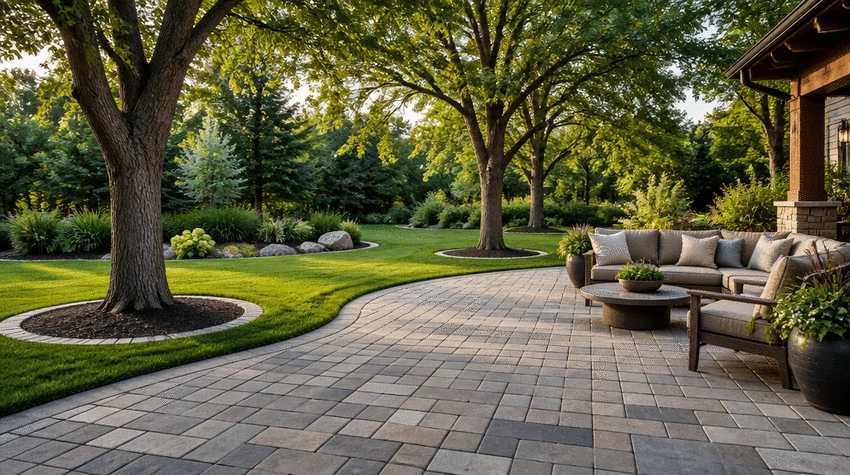
Finally, let’s consider aesthetics and purpose! Your choice of materials should align with the overall look and feel you want for your outdoor space while also serving practical functions. For example, a **garden path** made of permeable pavers not only enhances the visual appeal but also supports tree health by allowing water to reach the roots.
When selecting hardscaping materials, think about how they integrate with your landscape design. Here are some factors to consider:
By blending aesthetics with functionality, you can create an outdoor space that is not only beautiful but also benefits the trees that bring it to life. For further reading on integrating hardscapes and green spaces, see our article on merging hardscape and green spaces.
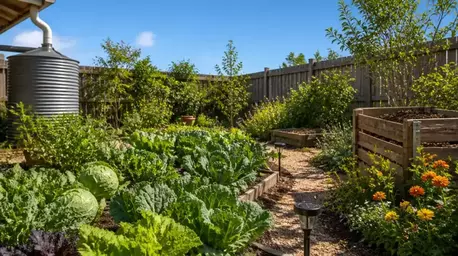
Did you know? Incorporating native plants alongside your hardscaping materials can significantly enhance tree health. Native plants are adapted to local soil and climate conditions, providing a supportive environment for tree roots. By creating a diverse ecosystem, you not only improve the aesthetics of your landscape but also promote better water retention and soil quality, benefiting both trees and plants alike.
As we wrap up our discussion on tree-safe hardscaping, it's important to reflect on the essential points that ensure both the beauty and health of your outdoor spaces. By understanding the materials that contribute positively to tree health, we can make informed choices that protect our green companions while enhancing our landscapes. Remember, the health of your trees is directly linked to the selection of hardscaping materials, so let's summarize the critical steps.
First, consider the type of materials you choose. Opting for permeable pavers, natural stone, or eco-friendly options can greatly benefit the trees in your yard. Additionally, being aware of the local climate and soil conditions will guide you in selecting the best fit for your landscape. Here are some key takeaways:
Are you ready to transform your outdoor space while ensuring the health of your trees? At Rooted Edge, we believe every hardscaping project should start with a deep understanding of how our choices impact the surrounding ecosystem. With the insights you’ve gained from this article, it's time to put them into action!
Whether you're planning a new patio, walkway, or any outdoor feature, remember to consider tree safety in your designs. By integrating tree-safe practices, you're not just enhancing your property's appeal; you're also fostering a thriving environment for your trees. Let's embark on this journey together, creating beautiful outdoor spaces that celebrate and protect the essence of nature! For further guidance, explore our insights on tree care around hardscapes.
Here is a quick recap of the important points discussed in the article:
By Elena Whitmore / Sep 19
By Elena Whitmore / Sep 12
By Elena Whitmore / Sep 03