Eco-Friendly Landscaping Practices Explained
By Elena Whitmore / Sep 19
Did you know that choosing the right trees can significantly reduce your landscaping workload while enhancing your outdoor beauty? Low-maintenance trees are not only practical but also an eco-friendly choice that benefits both you and your environment.
Understanding the essential traits and advantages of low-maintenance trees for your landscaping.
As an arborist with years of experience, I can tell you that low-maintenance trees can be a game-changer for homeowners seeking to create stunning landscapes without the fuss. But what exactly does "low-maintenance" mean when it comes to trees? It often refers to varieties that require minimal care, such as infrequent pruning, low water needs, and a natural resistance to pests and diseases. This makes them perfect for busy individuals or those who simply want to spend more time enjoying their outdoor spaces rather than maintaining them. For more insights on how to care for trees around existing structures, consider learning about tree care around hardscapes.
Choosing low-maintenance trees is not only practical but also beneficial for the environment. By selecting trees that thrive with less intervention, you're contributing to a healthier ecosystem. Sustainable practices are at the heart of what we do at Rooted Edge, and I encourage homeowners to consider the impact of their choices on the surrounding landscape. When you plant the right trees, you can create a thriving habitat for local wildlife while enjoying the beauty of nature.
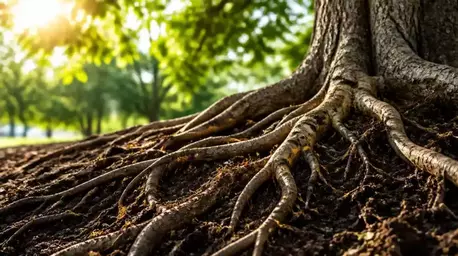
Low-maintenance trees are often defined by their ability to thrive in various conditions with minimal human intervention. These trees typically have deep root systems, which allow them to access moisture and nutrients without requiring frequent watering. By understanding this definition, you can make informed selections that enhance your landscape while reducing the workload.
The importance of these trees goes beyond ease of care. They offer benefits like improved air quality, reduced urban heat, and increased property value. Furthermore, planting low-maintenance varieties contributes to a sustainable landscape that conserves resources. This aligns perfectly with Rooted Edge’s mission to promote eco-friendly landscaping practices!
Several characteristics define a low-maintenance tree. These include:
By selecting trees with these traits, you're not just ensuring a beautiful landscape; you're also creating a more sustainable environment. As I often tell my clients, choosing the right tree is about understanding its needs and your lifestyle.
The benefits of incorporating low-maintenance trees into your landscape are numerous. Here are a few standout advantages:
In my experience with Rooted Edge, I’ve seen how these trees can transform a space beautifully while allowing homeowners to connect with nature effortlessly. It’s a win-win situation!
When selecting low-maintenance trees, consider native species. They are typically better adapted to local conditions, require less water, and support local wildlife, making them an excellent choice for sustainable landscaping.
Low-maintenance trees are varieties that require minimal care, such as infrequent pruning, low water needs, and natural resistance to pests and diseases.
Key characteristics include drought tolerance, resistance to pests and diseases, minimal pruning needs, and adaptability to various soil conditions and climates.
Benefits include being cost-effective (saving money on watering and pruning), time-saving, providing environmental advantages (improving air quality, supporting wildlife), and enhancing aesthetic appeal.
By requiring less water, fewer chemicals, and minimal intervention, these trees conserve resources and create a healthier ecosystem, aligning with sustainable landscaping practices.
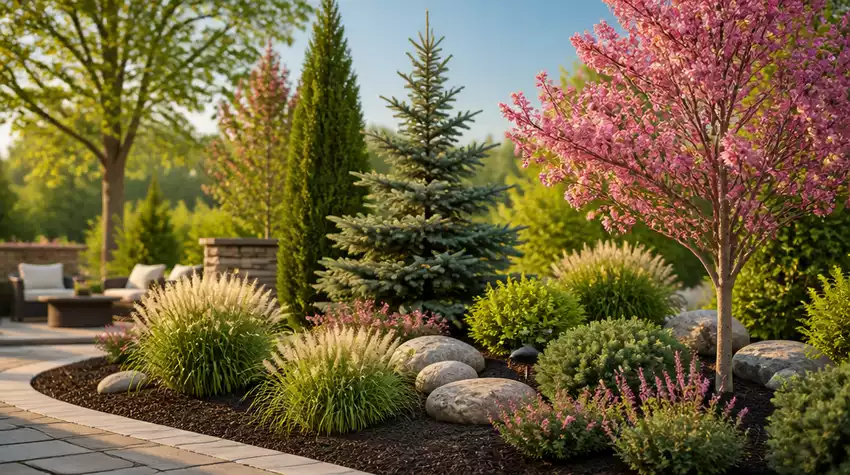
For shade, consider Japanese Maple and Eastern Redbud. For privacy screens, options like Arborvitae and Honey Locust are excellent choices.
As we wrap up our exploration of low-maintenance trees, it's crucial to remember the essential role they play in effortless landscaping. By choosing the right trees, you can create a stunning outdoor space that thrives with minimal effort! Whether you're looking for shade, privacy, or ornamental beauty, understanding your specific needs is the first step to success.
In our journey, we've identified various tree types that align with different landscape goals. For instance, if you're seeking a natural barrier, consider options like arborvitae or serviceberry. Each tree brings its unique charm and benefits to your space while requiring less care than traditional choices. To achieve this, understanding overall tree maintenance services can be incredibly helpful.
So, what trees should you consider for your landscape? Here’s a quick recap tailored for your needs:
Choosing the right tree based on your specific needs means considering your yard size, climate, and visual preferences. At Rooted Edge, we believe that understanding these factors leads to a thriving landscape that reflects your style while embracing nature.
When selecting trees, it's essential to think about what you want to achieve. Here are a few guiding questions to ponder:
By answering these questions, you can pinpoint which trees suit your vision. Remember, at Rooted Edge, we’re passionate about helping you navigate these choices with confidence!
In conclusion, the journey to a low-maintenance landscape doesn’t have to be complicated. With the right knowledge and tree selection, you can cultivate an outdoor space that flourishes effortlessly. Embrace the beauty of nature while enjoying the simplicity of low-maintenance care!
Let’s transform your backyard into a haven of sustainability and beauty together! I invite you to explore the options we've discussed and envision the possibilities for your own landscape. For further inspiration, consider exploring designing landscapes with trees.
Now that you're armed with insights about low-maintenance trees, what’s next? Here’s a straightforward action plan to guide you:
Taking these steps will set you on the right path! Remember, each tree you choose is an investment in the beauty and health of your outdoor environment.
One of the best ways to ensure success in tree selection and planting is to work with local experts. They can offer insights into soil conditions, climate considerations, and the best practices for your specific area. Don’t hesitate to reach out to professionals who share your vision for a sustainable landscape!
For those eager to dive deeper into the world of low-maintenance landscaping, here are some valuable resources:
By leveraging these resources, you'll gain the knowledge needed to make informed decisions for your outdoor spaces. Together, we can cultivate a landscape that celebrates both beauty and sustainability—let’s make it happen!
Here is a quick recap of the important points discussed in the article:
By Elena Whitmore / Sep 19
By Elena Whitmore / Sep 12
By Elena Whitmore / Sep 03